

Key Takeaways
- For most UK SMEs, the real-world choice is between standard plastic bubble wrap and biodegradable plastic bubble wrap with an additive.
- Biodegradable bubble wrap is designed to break down faster than standard LDPE under landfill‑like conditions, but it is not a paper or home‑compostable solution.
- Traditional plastic bubble wrap can persist for decades or longer in landfills and is rarely accepted in kerbside recycling.
- The higher unit cost of greener options can be balanced by brand, customer perception, and alignment with sustainability goals.
- Before switching, businesses should understand how biodegradable plastics are handled by their local waste and recycling providers.
Small to medium-sized businesses face growing pressure to reduce packaging waste whilst still protecting products and controlling costs. Traditional plastic bubble wrap has long been the default choice, but it now carries an environmental perception problem that can affect how customers view your brand. Understanding the practical differences between conventional and biodegradable bubble wrap is essential for making sensible, commercially realistic decisions.
Why Traditional Plastic Bubble Wrap Hurts Your Environmental Credentials
Standard small bubble wrap is typically made from low-density polyethylene (LDPE), a fossil-fuel-based plastic. It is lightweight, reliable, and familiar-but environmentally, it has drawbacks.
- Production: LDPE manufacturing relies on petrochemical feedstocks and energy‑intensive processes, contributing to carbon emissions.
- Recycling: In the UK, most councils do not accept bubble wrap in kerbside collections. Where film recycling schemes exist (often at supermarkets or specialist sites), acceptance of bubble wrap is inconsistent.
- End of life: If not captured by a specialist recycler, LDPE bubble wrap is usually landfilled or incinerated. In a landfill, it can remain for many years, fragmenting into smaller pieces rather than truly breaking down.
For brands promoting sustainability, this creates an evident tension: you may have improved your boxes or tapes, but the protective plastic inside the parcel can still be the most visibly “unsustainable” element for customers.
What “Biodegradable” Bubble Wrap Actually Means in Practice
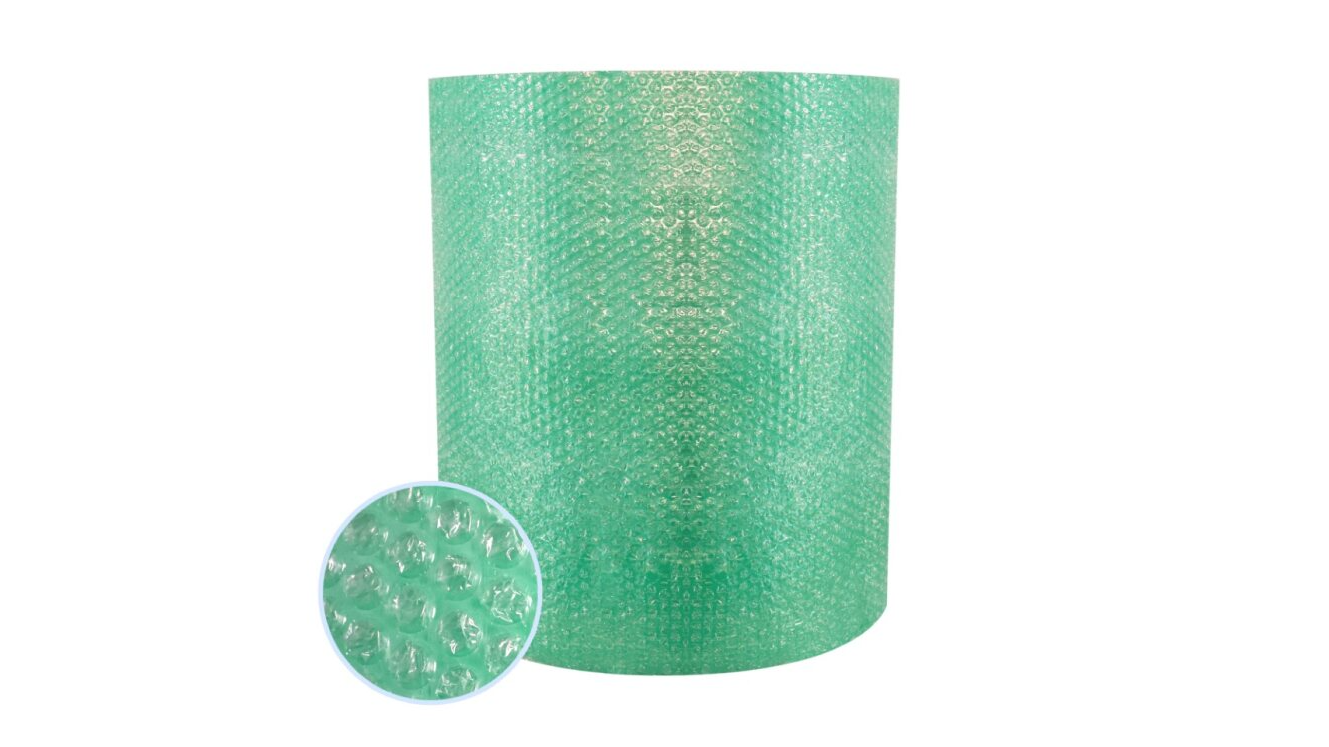
For most UK users, “biodegradable bubble wrap” does not mean a fully plant-based, home‑compostable material. Instead, it generally refers to a standard plastic bubble wrap manufactured with a biodegradable additive.
1. Additive‑Enhanced Plastic, Not Pure Plant‑Based Film
Biodegradable bubble wrap of the type commonly sold in the UK is:
- Based on polyethylene film, similar to standard bubble wrap.
- Manufactured with a proprietary additive that is designed to speed up degradation under certain conditions (typically when disposed of in landfill environments).
This is different from specialist PLA‑ or starch‑based films used for some compostable bags and liners. The goal here is to reduce long‑term persistence of plastic in landfills, rather than provide a certified industrial‑compostable solution.
2. Degradation Depends on Conditions, Not a Fixed Timeframe
Marketing for biodegradable plastics often mentions faster breakdown compared with standard plastic. However:
- Actual degradation rates depend on temperature, moisture, oxygen availability and microbial activity.
- These conditions vary widely between landfill sites and waste‑treatment routes.
- Biodegradable bubble wrap should not be assumed to “disappear” within a set 90-180 day window in real‑world waste streams.
In other words, biodegradable bubble wrap is intended to break down more quickly than conventional LDPE under appropriate conditions, but it should not be treated as food waste, garden waste or certified compostable packaging.
3. Protection Remains Comparable to Standard Bubble Wrap
A key benefit is that biodegradable grades are designed to perform similarly to standard small‑bubble wrap. They offer similar cushioning and shock absorption and are just as easy to use for wrapping and void fill. They are also available in familiar widths and roll lengths. For most e‑commerce and fulfilment applications, they can be used wherever you currently use standard small bubble wrap, without significant changes to your packing process.
Cost and Commercial Considerations
Higher Unit Cost vs Brand and Compliance Benefits
Biodegradable bubble wrap generally costs more per roll than the most basic standard LDPE option. However, there are offsetting factors:
- It supports sustainability messaging on your website, packaging pages and product listings.
- It can help reduce the perceived “plastic load” in your parcels, which matters for eco‑conscious customers.
- It may align better with corporate ESG targets or buyer requirements, especially in retail and B2B supply chains that are tightening sustainability criteria.
For many SMEs, the marginal increase in packaging cost is modest compared with the value of customer trust, repeat business and alignment with environmental commitments.
Hidden Costs of Staying with Standard Plastic
Sticking solely to conventional plastic bubble wrap can carry its own costs. Negative perception from customers expecting more sustainable options and potential misalignment with policies that favour recyclability and reduced plastic waste can result in a missed opportunity to differentiate your brand in a crowded market.
Whilst there is no single “right” answer for every business, it is sensible to factor these softer costs into your decision rather than looking at unit price alone.
Practical Advice for SMBs Considering Biodegradable Bubble Wrap
1. Use It Where It Delivers Clear Value
Biodegradable bubble wrap is particularly useful for:
- Customer-facing parcels in sectors where sustainability is a selling point (homeware, beauty, lifestyle, premium retail, gifting).
- Brands that highlight eco‑friendly materials in their product descriptions and marketing.
- Businesses that want to improve their packaging without overhauling their entire system.
For very heavy‑duty or industrial applications, you may still prefer specific high‑strength plastic or alternative cushioning, depending on risk tolerance and damage rates.
2. Understand Local Disposal and Recycling Options
Before switching, check whether any local film recycling schemes accept biodegradable‑additive plastics (many do not). You will also want to identify how your general waste is treated-landfilled, incinerated with energy recovery, or otherwise-and whether any of your commercial waste providers offer specific guidance on biodegradable plastics.
Even where recycling options are limited, using a product designed to degrade faster in a landfill may still offer an incremental improvement over conventional LDPE, as long as you are transparent and honest about its limitations.
3. Communicate Clearly with Customers
If you choose biodegradable bubble wrap:
- Avoid over‑claiming. Do not present it as “plastic‑free” or “fully compostable” unless you are using a certified compostable film.
- Use straightforward language such as: “Biodegradable bubble wrap designed to break down faster than standard plastic under landfill‑like conditions.”
- Consider adding brief disposal guidance in your FAQs or packaging section so customers understand what to do with it.
Clarity helps avoid accusations of greenwashing and builds trust.
Is Biodegradable Bubble Wrap the Right Choice for Your Business?
Biodegradable bubble wrap is not a magic fix for packaging waste, and it does not replace the need to reduce and optimise packaging overall. However, for many UK SMEs, it offers a practical “better, not perfect” option. It works best when used as part of a broader packaging strategy that might also include:
- Right‑sizing boxes to cut void space.
- Switching to paper tapes or recycled cardboard wraps where appropriate.
- Combining plastic‑free options (for some lines) with biodegradable bubble wrap, where you still need flexible cushioning.
For help choosing the right mix of packaging for your business-including standard and biodegradable bubble wrap-speak to packaging specialists who supply multiple industries and can advise on sustainable options that fit your products, fulfilment process and budget.

Comments are closed.